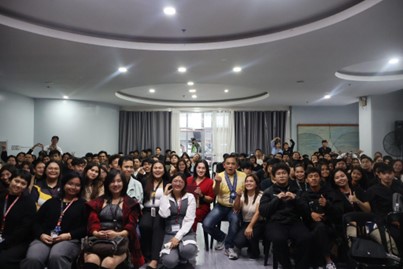

Showcasing its continued pursuit of excellence, the University of Baguio actively participated in the ASEAN Language and Culture Exchange (LACE), a month-long virtual internationalization program that promotes intercultural dialogue, language appreciation, and people-to-people connectivity among students from ASEAN Higher Education Institutions.
Written by Erika Latawan and Jilliane Agtulao
Hosted by Ifugao State University, with UB’s participation coordinated by the University of Baguio Linkages Office, the virtual sessions ran from August 12 to September 4, 2026. Across six sessions, students explored the languages and cultures of Southeast Asia — Bahasa Indonesia and Javanese, Thai and Lao, Khmer and Vietnamese, Filipino and Mandarin Chinese, Burmese and Tetum/Portuguese, and Malay — each paired with lessons on local traditions, delicacies, and student life from the featured countries.
The opening session, which centered on Indonesian culture, introduced delegates to core cultural pillars such as gotong royong (mutual cooperation), Bhinneka Tunggal Ika (“Unity in Diversity,” the national motto), and Indonesian politeness norms. Students also practiced essential Bahasa Indonesia vocabulary, from family terms to common active and passive verbs, guided by the session’s facilitator. For the Philippines’ featured session, UB was paired with Mariano Marcos State University, exchanging insights on Filipino language and culture.
Jilliane, one of the participants, shared that the session encouraged them to be curious and to find answers to the things they do not yet understand about other cultures. It also reminded her that even simple things such as food and everyday traditions can carry meaning. As Filipinos, we often use the word “sayang” when something is wasted or left behind, which also reminded me to appreciate the opportunities and experiences given to us through the program.
One of the most memorable sessions for Jillian was the session about Timor-Leste. They learned about the culture, traditions, heritage, and languages, including Tetum and Portuguese. During the session, they were taught a song: “Mai Fali E, Fila Fale E, Mama Bolu Ita Fali E.” The song was explained in English as “Come back, Mom calls us to come back.”
She shared that although the song was simple, its meaning carried a deeper emotion that touched my heart. It expressed a feeling of longing, love, and the desire to return home to someone who is waiting for you. Hearing the song and understanding its meaning made her realize how powerful language and music can be in expressing emotions that words alone cannot always explain. This became one of the moments I remembered most from the ASEAN LACE journey because it allowed her to connect with Timor-Leste’s culture on a more personal and emotional level.
The ASEAN LACE experience also led to the 3rd ASEAN Fusion: ASEAN Booth Open House, which was scheduled for September 3, 2026. The event featured ASEAN booths showcasing the cultures and traditions of member states, cultural performances, college busking, and opportunities to learn, engage, and connect through cultural exchange.
Alongside ASEAN LACE was the ASEAN Campus Cross Chat (ACross), where student participants were grouped into teams and collaborated through WhatsApp. The activity encouraged them to build cross-cultural friendships, share experiences and perspectives, identify cultural similarities and differences, and develop an intercultural presentation for the culminating program.
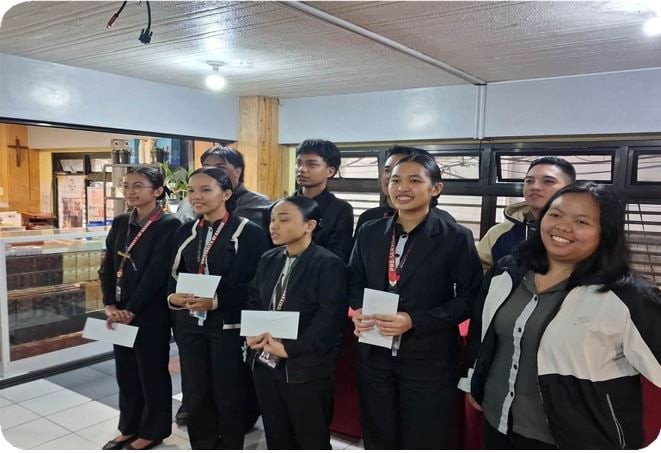
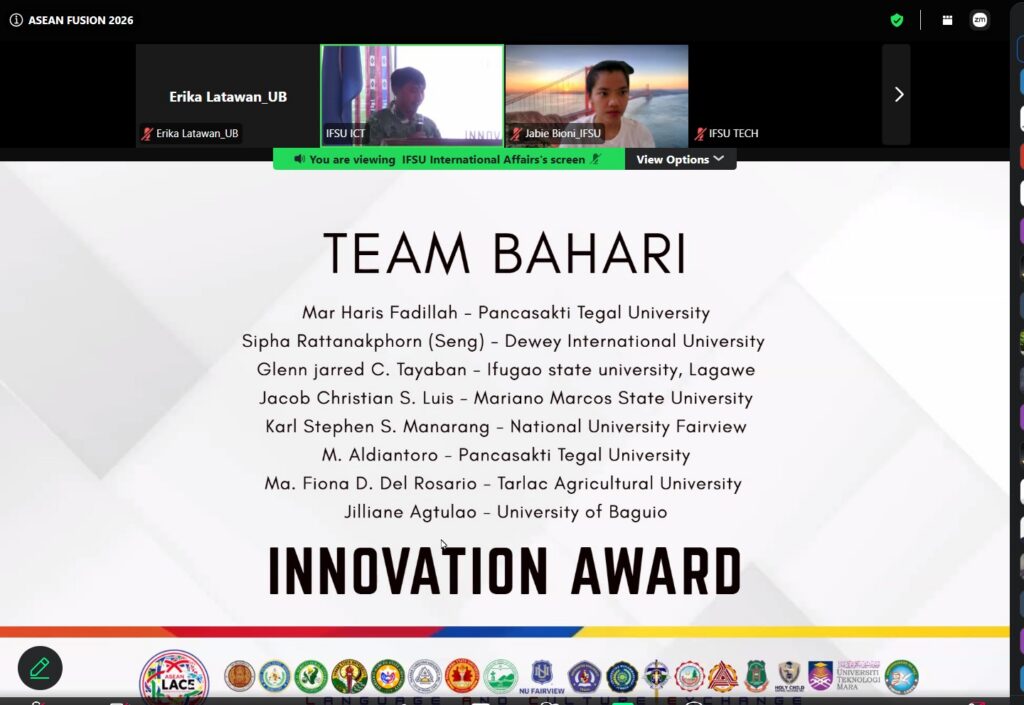
Two UB delegates received recognition for their ACross teams. Jilliane Agtulao of Team Bahari received the Innovation Award, while Precious Cayat of Team As’One won Best Data Visualization Project.
Students from various departments represented the University of Baguio throughout the program. The delegates were Erika Latawan and Shannia Sanidad from the School of Information Technology, Jilliane Agtulao from the School of Engineering and Architecture, Precious Cayat from the School of Teacher Education and Liberal Arts, and Royce Vincent Alangsab from the School of International Hospitality and Tourism Management. They were accompanied by Mr. Zhein Carlo Molina of the Office of Student Affairs.
A Stride Toward Sustainable Development
The program also contributed to the University’s advancement of the United Nations Sustainable Development Goals (UN-SDGs), particularly:
- SDG 4: Quality Education – by providing a platform for students to experience a globalized education that goes beyond the classroom;
- SDG 17: Partnerships for the Goals – through its support for international partnerships that build stronger regional bonds and advance internationalization;
- SDG 10: Reduced Inequalities – allowing students from different backgrounds to come together and collaborate equally;
- SDG 8: Decent Work and Economic Growth – equipping students to be highly competitive and employable in the global workforce.
Five UBians logged off their final ASEAN LACE session with more than they signed up for: new friends, awards, and a deeper appreciation for languages they could not speak a month ago.